
Monday, January 19, 2015
New Mow Lines

Thursday, January 15, 2015
Problem Areas
 With cooler temperatures and some much needed rain, the golf course is in pretty good shape. However, we still have several areas that are a thorn in my side. Despite our many efforts, we have been unable to get these areas to fill-in. One thing nearly all of these areas have in common is that they receive a lot of equipment and/or cart traffic and are very compacted. At this point we have decided that our best plan of action would be to strip, rototill and sod these areas. Unfortunately, we need to wait until the end of February or the beginning of March, when we have a little warmer soil temperatures.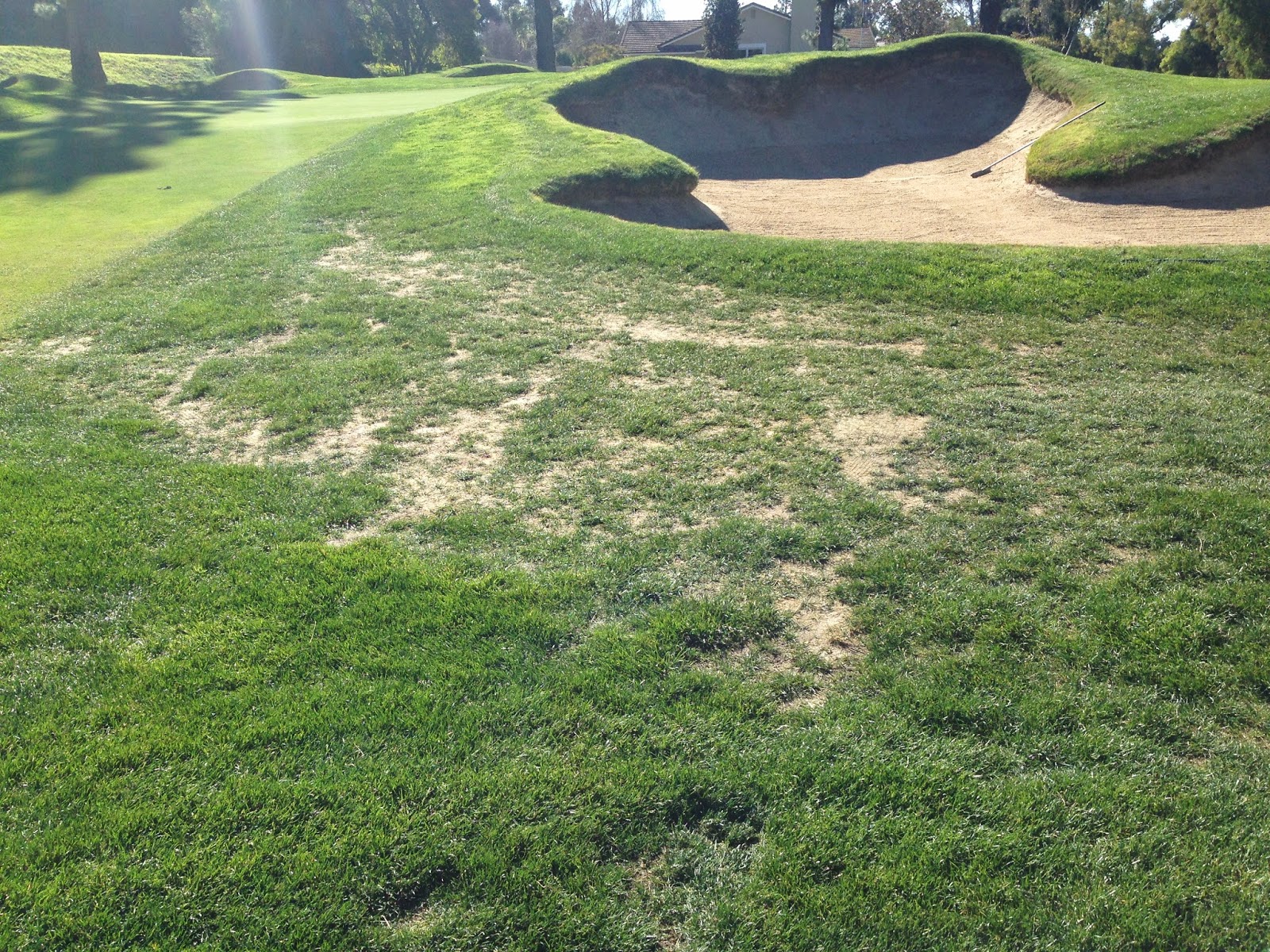
Wednesday, January 7, 2015
Reduced mowing schedule

Friday, December 12, 2014
Another good rain!


As of 8:00 AM this morning we have received 2.1" of rain in the last 10 hours. We have a river running down #1, #14, #17, etc. Standing water is everywhere. We are checking drains and for downed trees and any other damage.The soil is completely saturated and gives way when walking on slopes. Needless to say, the course is absolutely unplayable and closed for the day.

Friday, December 5, 2014
Getting better!
I took a walk today to see how the course was drying out following this weeks rain. In total we received 1.5" of rain between Tuesday and Wednesday. As of this morning we still have numerous areas that remain really wet. We will restrict all carts to paths today (Friday), but hope to get most, if not all holes open tomorrow. Not only is there potential for tire damage, but we must also consider the fact that we have a lot of young seedlings just starting to grow which are quite delicate and unable to withstand any cart traffic; and the use of carts on soft, wet soil will lead to future compaction issues.
Thursday, November 20, 2014
Seeding Roughs

Thursday, November 6, 2014
To say that we have a tough combination of soil and water on which to grow our fairways would be an understatement. Recent soil analysis has us at over 50% clay (under 20% is desired) with infiltration rates less than one inch per hour. Add to that a water that is high in salts and a three year drought and you have a perfect storm for stressed or dead turf. The heavy soil prevents the water from percolating down, thus encouraging the plants to keep their roots near the surface where the moisture lies. However, with very few leaching rain events over the last few years, the salts have also accumulated in the same upper soil profile that the roots occupy. The shallow rooted plants typically die, while those with a deeper root system have made it through the summer. The layer from the dead turf further impedes the water from moving into the soil, often creating a layer of algae.

If this year's El Nino prediction holds true and we finally get some significant rain, we will see a reduction in salts, as the volume and weight of the rain will finally move water deeper into the soil profile. Where the water goes, so to does the salts.......
Subscribe to:
Posts (Atom)